
reissued for the 50th anniversary of the Soweto Uprising
reissued for the 50th anniversary of the Soweto Uprising
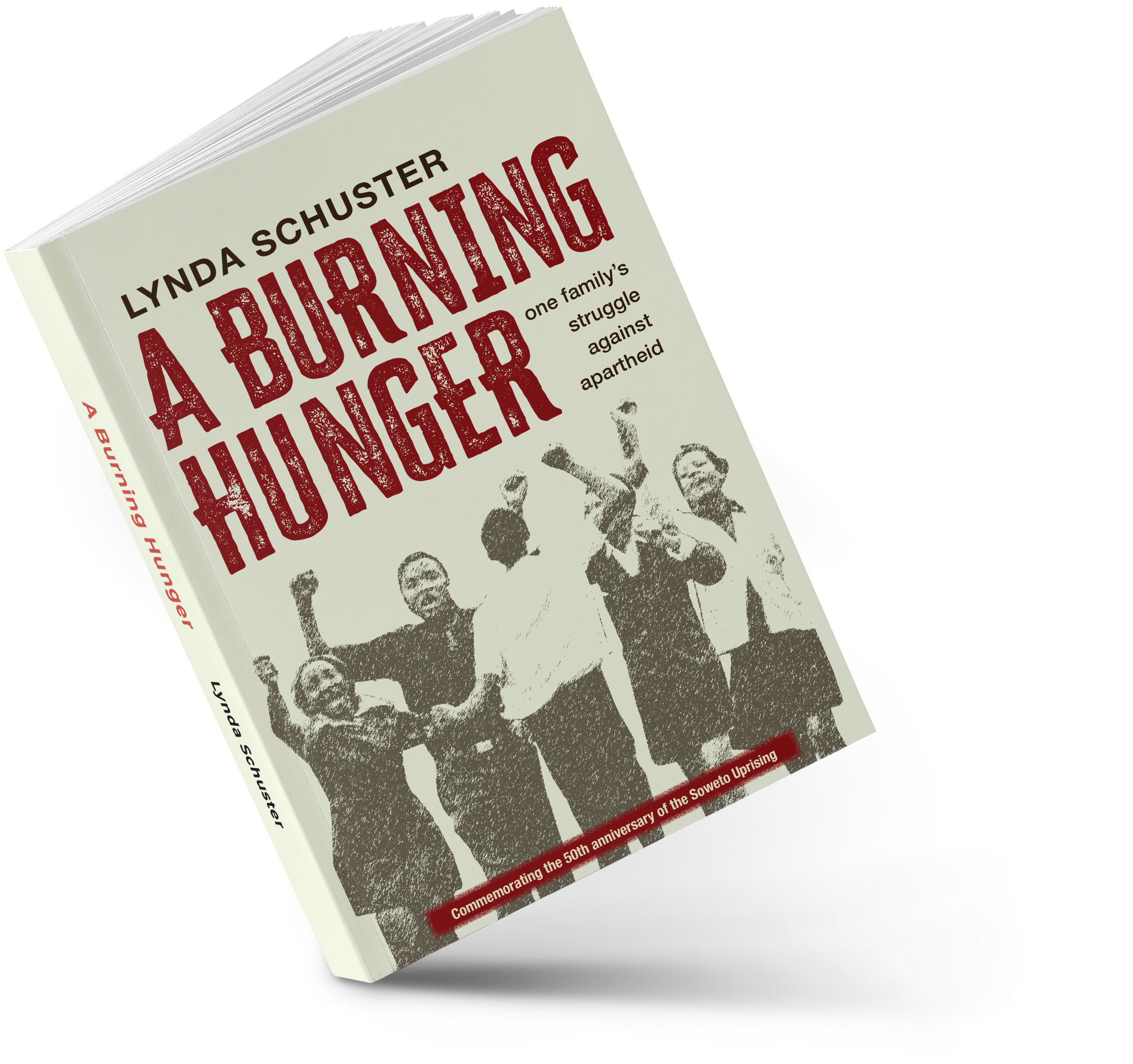
A Burning Hunger
One Family’s Struggle against Apartheid
If the Mandelas were the generals in the fight for black liberation, the Mashininis were the foot soldiers. Theirs is a story of exile, imprisonment, torture, and loss, but also of dignity, courage, and strength in the face of appalling adversity. Originally published in Great Britain to critical acclaim, A Burning Hunger: One Family’s Struggle Against Apartheid tells a deeply moving human story and is one of the seminal books about the struggle against apartheid.
This family, Joseph and Nomkhitha Mashinini and their thirteen children, became immersed in almost every facet of the liberation struggle—from guerrilla warfare to urban insurrection. Although Joseph and Nomkhitha were peaceful citizens who had never been involved in politics, five of their sons became leaders in the antiapartheid movement. When the students of Soweto rose up in 1976 to protest a new rule making Afrikaans the language of instruction, they were led by charismatic young Tsietsi Mashinini. Scores of students were shot down and hundreds were injured. Tsietsi’s actions on that day set in motion a chain of events that would forever change South Africa, define his family, and transform their lives.
A Burning Hunger shows the human catastrophe that plagued generations of black Africans in the powerful story of one religious and law-abiding Soweto family. Basing her narrative on extensive research and interviews, Lynda Schuster richly portrays this remarkable family and in so doing reveals black South Africa during a time of momentous change.
Watch The Tipping Point That Changed South Africa with Pamela BrewerPart 1 & Part 2
Read an excerpt on Literary Hub.
Read an excerpt on Pittsburgh Review of Books.
Watch Author Talk @ Politics & Prose Washington, DC
“The characters’ lives are filled with twists that make this book part Greek tragedy, part love story, and part thriller.” —Femina
“Marvelous, rich and rewarding...”
— The Times of London
“A Burning Hunger is a vital reminder of one of the most intense political struggles in living memory. It's fascinating, triumphant and ultimately very sad.”
— Times Out
“Of all the valuable books I have read, Schuster's was the first to draw me so close that I could smell the burning tires that barricaded Soweto streets that week; I could smell the thick smoke of burning shops and police vehicles—all coupled with a family's burning hunger for survival.”
— Mercury
“This must rank as one of the most important contributions to the history of the period. It is simply required reading.”
— The Northern Echo
“A Burning Hunger is the history of a South African family that suffered, resisted and finally triumphed over apartheid: a book that is as fascinating as the best novels.”
— Maria Vargas Llosa
“It is strange that no South African writer has thought of doing what Lynda Schuster, an American journalist, has done so well in this book— follow through the history of a black family in the context of the anti-apartheid struggle.”
— The Sunday Times
“This is an earnest and passionate historical account, crafted from meticulous research and study. It is a narrative made for captivating reading and painful reminder of the brutality of the apartheid system. The book is a welcome addition to a much needed but historically neglected genre of struggle biography.”
— Reverend Frank Chikane, Director-General in the Office of South African President Thabo Mbeki
“In A Burning Hunger, Lynda Schuster tells a tale that should have been told a long time ago.”
— The Citizen
"Although A Burning Hunger gives a clear insight into the politics of the time, it is the exposed humanity of the family members that makes this book so compelling and poignant."
— Brainstorm
“The apostles of apartheid wanted African children to become hewers of wood and drawers of water. Lynda Schuster shows why those of Nomkhitha and Joseph Mashinini became brave freedom fighters instead. They were sustained by the spirit of their ancestors, their religious belief and their confidence in the leaders of the struggle. The story of the Mashininis is a lesson which both oppressors and democrats should read.”
— George Bizos, human rights advocate and author of No One to Blame: In Pursuit of Justice in South Aftrica
"It is a major contribution to the history of the struggle era, giving a human face to a family that was idolized by black South Africans and demonized in white South Africa.”
— Business Day
Join Us for these upcoming events

Andrew Carnegie Free Library and Music Hall
300 Beechwood Ave. Carnegie, PA 15106
Monday, August 17, 2026 at 7:00 pm

Trump rejects the heroes of South African history
by Lynda Schuster
Special to the Post-Gazette
First Published: May 1, 2026, 4:30 a.m.
REad online
-
With the impending 50th anniversary of the Soweto Uprising, South Africa’s biggest rebellion against apartheid, it is important to remember who the true victims of its brutal racism were — and put the lie to President Donald Trump’s perversion of the country’s past.
Last year, Trump shockingly stopped all refugee admissions into the U.S. — including those from war zones — except for Afrikaners, a white South African minority group that he said were the targets of racial persecution and systemic violence. No matter that these claims have been widely debunked. Of the mere 4,499 refugees allowed into the U.S. since October 2025, all but three were white South Africans, according to the State Department’s Refugee Processing Center.
Apartheid horrors
As he does with race issues here in the U.S., Trump’s fixation on supposed white victimhood seems an attempt to flip South African history on its head. But no amount of sophistry can undo the reality of apartheid’s horrors. Yes, the country has experienced horrifying racial persecution and systemic violence — all institutionalized and aimed at the country’s Black and brown citizenry from 1948 to 1994.
I witnessed this first-hand as a journalist. By the time I landed in Johannesburg in 1987, I had covered wars and civil unrest around the world. I wasn’t a naïf. But never had I been in such a place as South Africa, where more than 85% of the population was, by law, marginalized, dehumanized and disenfranchised.
This was what apartheid mandated: the ability of your brain or contents of your heart counted for nothing; race was everything. Race was destiny. It determined, quite literally, where you were born, where you grew up, where you were educated, where you could work, whom you could marry, where you could live, where you would die and be buried. And it was ruthlessly enforced.
I will never forget one of the first interviews I did, that of an Afrikaner judge. “When I look down from the bench at a Black (person),” he told me, “I don’t see a human. I see a monkey.” This, from an ostensible arbiter of justice.
The heroic Mashininis
Among the hundreds of Black South Africans I met during my time there, the Mashininis — about whom I would ultimately write a book — perhaps best epitomized apartheid’s inescapable tentacles and the trauma that it inflicted across generations. A poor law-abiding family of 13 children, the parents were strict disciplinarians and unbending on two matters: regular church attendance and good grades in school. That is, until June 16, 1976.
On that morning, the youth of Soweto, Johannesburg’s massive Black township, rose up in protest against a new rule making Afrikaans the language of instruction in their classes. (A language that most of them did not know well.) Tsiestsi Mashinini, the charismatic second-oldest in the family who was a high schooler at the time, led them in demonstrations that quickly exploded into the country’s largest insurrection. Hundreds are thought to have died; thousands were injured.
Tsietsi’s actions on that day set in motion a chain of events that changed his country irrevocably and forever defined his family. From that moment on, the Mashinini name became the stuff of legend among people in the townships — and anathema among the dreaded Security Branch of the South African Police. Many of Tsietsi’s siblings, even his parents, now found themselves pulled inexorably into the struggle against apartheid.
One brother became a commander in the army of the outlawed African National Congress (ANC) — whose guerrillas launched attacks against the white government — living a clandestine existence for years. Another was twice arrested for his militancy, hideously tortured, tried for treason, freed — only to help incite the revolt of the 1980s that finally brought the white government to its knees. Yet another brother escaped from South Africa as a youngster; taken into the ANC fold, he would grow up in exile in the organization. Their mother, simply because of her surname, spent 197 days in solitary confinement in jail.
The courageous foot soldiers
As for Tsietsi, he managed to elude the security police and slip out of the country — only to die under mysterious circumstances in West Africa. He never got to see the fruition of what he started on that June morning: the transition to a free and democratic South Africa, culminating in the election of Nelson Mandela as president in 1994.
If the Mandelas were the generals in the fight against apartheid, then the Mashininis — and tens of thousands of other everyday South Africans — were the foot soldiers. Theirs is a story of imprisonment, torture, separation and loss, but it is also one of dignity, courage and strength in the face of appalling adversity. Ordinary people caught up in extraordinary circumstances.
These are the people who will be celebrated on June 16: the true victims of South Africa’s racial persecution and systemic violence. For Trump to assert otherwise is not just revisionist history. It is an utter disgrace.
Lynda Schuster is a former foreign correspondent for the Wall Street Journal and Christian Science Monitor. Her book, “A Burning Hunger: One Family’s Struggle Against Apartheid,” has been reissued to commemorate the 50th anniversary of the Soweto Uprising.
Announcing the South African Edition
Announcing the South African Edition
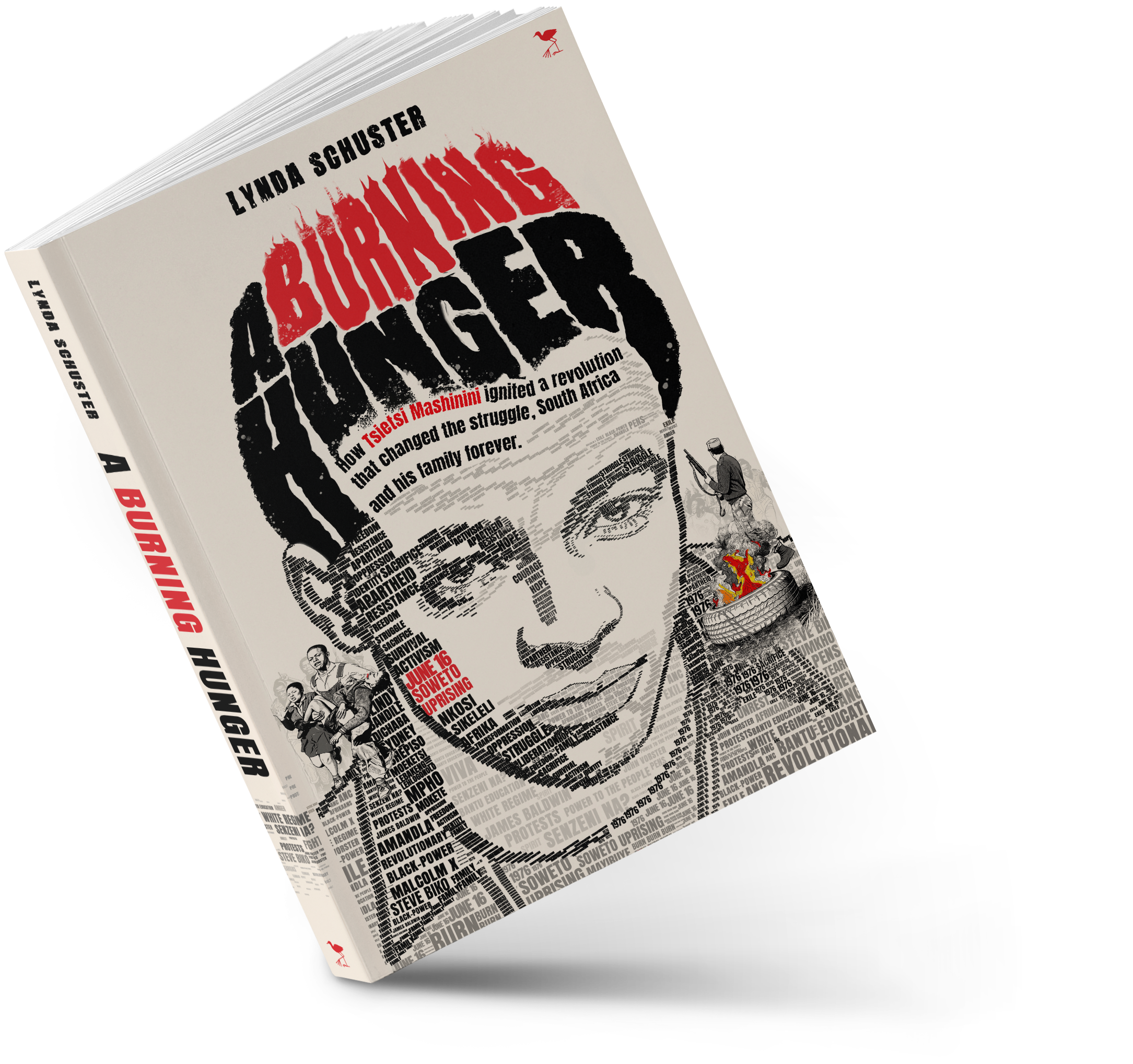
A Burning Hunger
How Tsietsi Mashinini ignited a revolution that changed the struggle, South Africa and his family forever
Listen to A Burning Hunger Online Launch
In Her Own Words
Lynda Schuster on the man who sparked a revolution, the family that paid the price, and why this story matters more than ever.